GRA Expands Spectral Analysis Capacity Across Member Laboratories
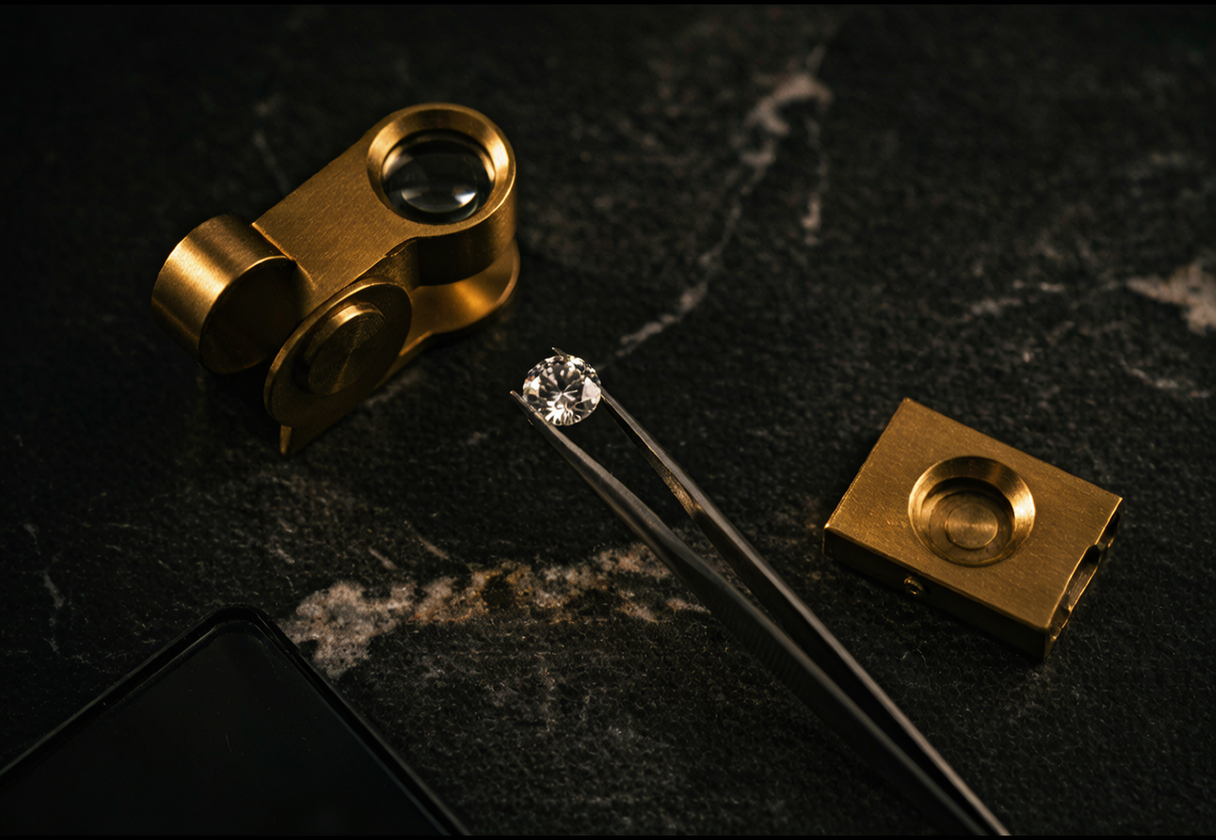
A new generation of photoluminescence spectrometers is rolling out across the GRA laboratory network, cutting certification turnaround times and hardening anti-fraud checks through automated girdle-inscription matching.
Faster, deeper analysis
The new instruments capture a full spectral fingerprint of a stone in a fraction of the time required by previous-generation equipment. Features that previously required manual interpretation — nitrogen-vacancy signatures, strain patterns, phosphorescence decay curves — are now classified automatically against reference libraries, with every result archived alongside the report record.
Anti-fraud at the girdle
Each certified stone carries a laser inscription of its report number on the girdle. The upgraded workflow photographs and machine-reads the inscription during grading, then cross-checks it against the issued report. Any mismatch — a re-polished stone, a swapped number, a counterfeit inscription — is flagged before the report is released.
Automated inscription matching means the number on the girdle and the number on the report are confirmed to agree, by machine, every single time.
What clients will notice
- Standard certification turnaround reduced, with peak-period backlogs largely eliminated.
- Every report's verification page now reflects the full instrumented screening the stone received.
- Member laboratories share one spectral reference database, so results are consistent across locations.
The expansion underlines GRA's core commitment: a report is only as good as the science — and the checks — behind it.