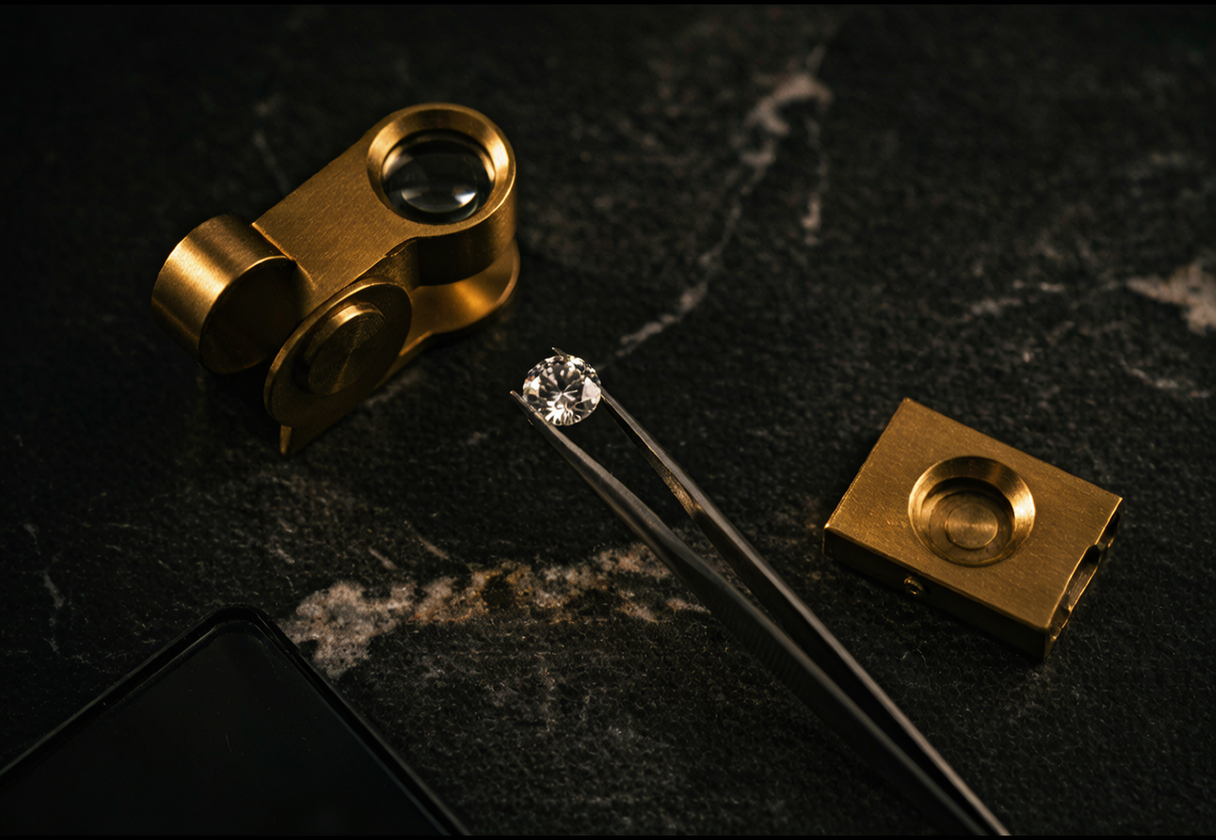
CVD vs HPHT: The Two Technologies Behind Lab-Grown Diamonds
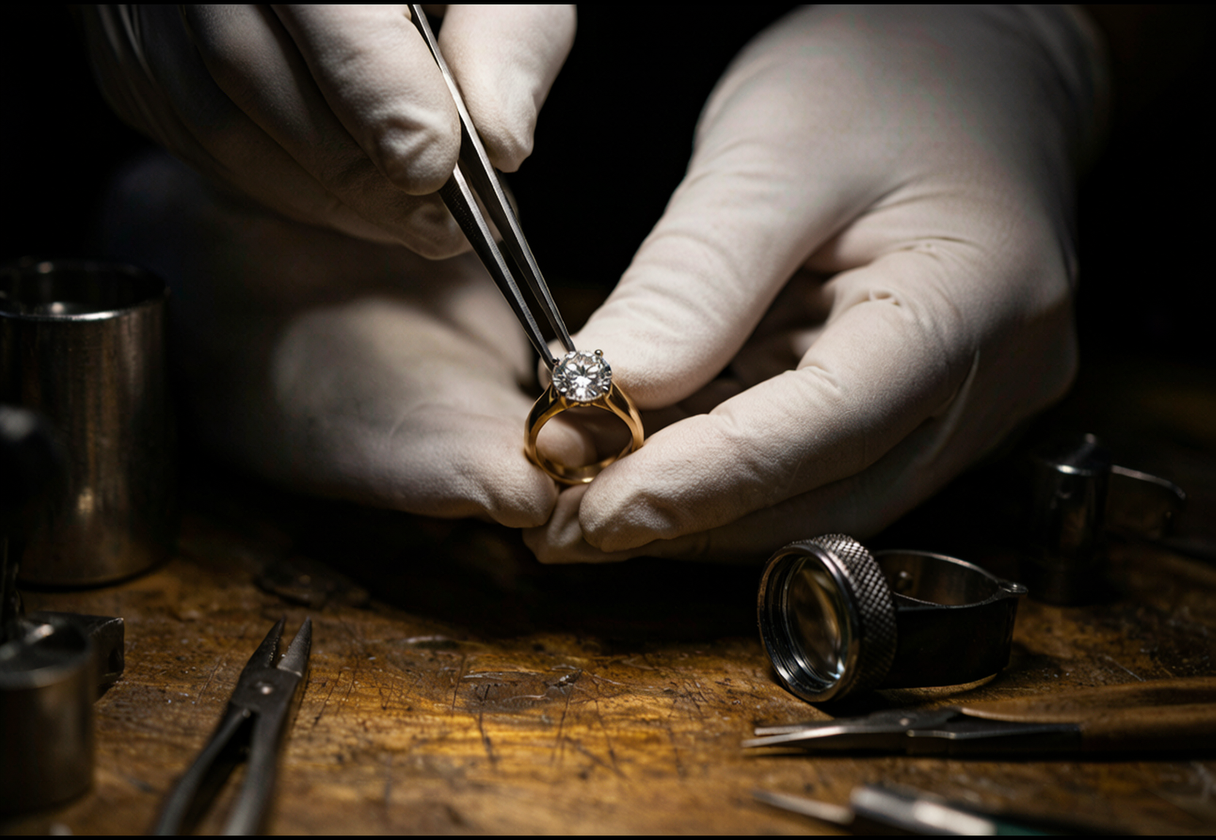
Every lab-grown diamond begins in a machine, but not every machine works the same way. Two processes dominate: Chemical Vapor Deposition (CVD) and High-Pressure High-Temperature (HPHT).
How CVD works
CVD growth starts with a thin diamond seed plate placed in a vacuum chamber. Carbon-rich gas — usually methane — is ionized into plasma, and carbon atoms precipitate onto the seed layer by layer, building a diamond upward like crystal masonry. The process runs at low pressure and moderate temperature, offering exceptional control over purity and color.
How HPHT works
HPHT recreates the earth's mantle inside a press: a carbon source, a metal solvent catalyst and a diamond seed are subjected to pressures above 5 GPa and temperatures near 1,300–1,600 °C. Diamond crystallizes out of the molten metal much faster than in CVD, which makes HPHT attractive for volume production.
Strengths and trade-offs
- CVD: unmatched color consistency and very low nitrogen content; slower growth, larger plates achievable.
- HPHT: faster crystal growth and lower capital cost per carat; historically higher strain and more variable color.
- Post-treatment: many HPHT stones are annealed to improve color; CVD stones occasionally receive similar treatment.
Why graders care
The growth method leaves microscopic fingerprints — strain patterns, metallic inclusions, fluorescence behavior — that trained gemologists and spectrometers can read. Modern grading reports identify the growth process and disclose any post-growth treatment, which is precisely why independent certification matters when the two technologies look identical to the naked eye.